Devesh

Devesh
Little Krishna

Labels

Pages

Powered By Blogger

Tuesday, March 23, 2021

The Shiva Purana - 10

 Vidyeswara Samhita  - Chapter - 3


The omnipotent Shiva Purana amplifies the essence of the Vedantas - Bhakthi, Jnana and Vairagya. Once upon a time when the creation started in this kalpa, a great dispute raised among the sages and they approched Brahma to find the answer about what is imperishable. His answered that Lord Mahadeva was omniscient and can only be realised by supreme devotion and nothing else. The sages were instructed to perform a devout sacrifice with Lord Shiva as the presiding deity for thousand years and then one can undersatnd the essence of mystic learning - Vedas and Vedanta. While performing the Yagna, the Sadhaka should devotedly perform the rites free from desire and offering the fruits of achievement to Lord Siva. Through the Salokya, one can attain the holy feet of Lord Shiva. 

Further Brahma explains that Sruti is our recluse. Sravana or listening to Lord's divine story is the first rite. Then one should glorify or indulge in Kirtana and finally deliberate, meditate or follow Manana to gain Shiva yoga. Body gets rid of materialistic cravings, ailments are nullified and one can achieve supreme bliss. The achievement is an embodment of Shiva gnana - Salokya (to be in the same world along with the Lord), Samipya (nearness to the deity), Sayujya (union with God), Sarupya (assimilation to the deity) and become a Sarsti (equal in rank, condition and power) which is the final destination of Mukthi (Salvation).

Om Namah Shivaya!

D. Ashalatha Reddy

Discover India Series - 5

 Mogili - Where we can feel the benevolence of Lord Shiva

Sometimes it is natural that we are fascinated by nostalgia and many memories. In the course our many road trips and short getaways I remember our visit to Mogili. There are no words to express how I miss Daddy. I always think of how much he used to feel elated to visit many places. As workaholic as he was he never took out time to travel. After his retirement he quite enjoyed his small trips and many tours. One place which I visited along with him some 12 Years ago was a small and lovely village Mogili.

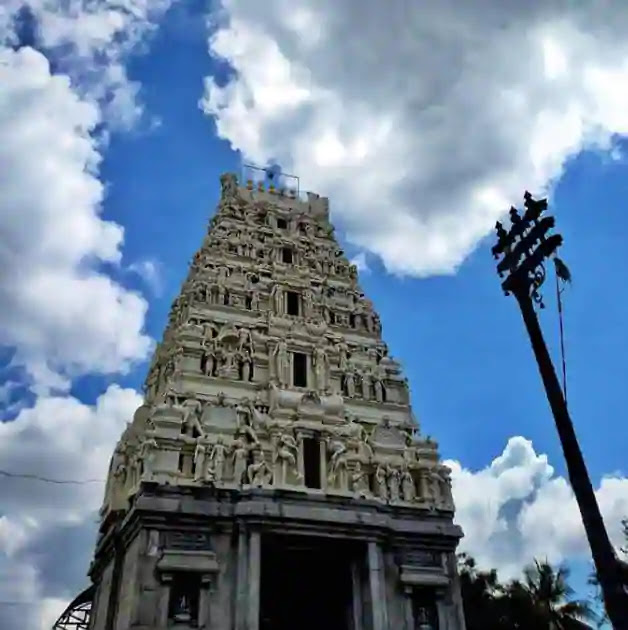
The sacred temple of Sri Mogilieshwara Swamy is located at a distance of 90 Kms from Tirupati, 60 Kms from Vellore and 30 Kms from Chittoor on the Tirupati-Bangalore Highway very close to Bangarupalem. The main temple houses Lord Shiva who is said to be found by Mogilliappa, a farmer who later placed it under a Mogili tree, and started worshipping it. That’s why this temple got the name “Mogili Eswara Temple”. The temple facing east with three gopuras also has the shrines of Lord Dakshina Murthy, Lord Vishnu and Lord Brahma. The Sanctum hailed as Dakshina Kailasam has the shrine of Godess Kamakshi on the Northern side who bestows benevolent boons for all her devotees. The Tempe is surrounded by a compound wall, beautiful architecture and inscriptions dating back to the reign of Raja Raja chola, a Paadal Petra Shthalam praised in the holy hymns of Nayanars.

The perennial temple pond is famous for having medicinal and benefac effects and hence a dip is considered a blessing. The worship of Nandi and Lord Shiva is considered to give peace and prosperity. The Shivaratri Brahmotsavam is very famous and thronged by people in large number. This temple is a boon for childless couple and hence said to be a place to get the desires fulfilled if prayed with utmost devotion. South to this Temple, a big hill is situated with a big stone of 3 miles in diameter and more than 100 feet in height. This stone is popularly known as Devara Konda. Though the path to Devarakonda is slippery and not well laid as of now, it is beautiful place in the lap of nature to unwind and meditate.

The simple joys of life make our living stress free and what best than spend time with family in a place which is blessed too.

Om Namah Shivaya

D. Ashalatha Reddy


Friday, December 18, 2020

Discover India Series - 4

 The Ecstasy of Reminiscence - Srivilliputhur


Poli Padyami, the first day of Marghasheersha / Dhanur Masam along with Karthika Amavasya is considered sacred as they mark the end of the month of Karthik and salvation given to Poli for her devotion. My very early and fond memories of this lovely winter month was that of the time when I was 4 or 5 Years old. My Grandfather who was a pious devotee, used to practice all the rituals very stringently and do the pooja early in the morning. We were taught to get up in Brahmi muhurtha, take bath and visit Sri Vaishnava temples and do pradkshinas. He was a gentle soul who used to say that one who cannot go to the temple can keep the Idol of Lord Ganesha in a plate or on a pedestal and do the circumambulations at home itself. I was his dear granddaughter and still follow many of his ideals. He passed away when I was 7 years old. But, the great strength of devotion that he taught always remained with me. I practiced the Dhanur Masam rituals many years at temples and at home. This is the holy month when we read Tiruppavai and pray to Godess Goda (Kodai) Devi and follow her instructions in the devotion to Lord Ranganatha. The month ends with Goda Kalyanam and Pooja. As a child, as a youngster and now in the middle age this story has never stopped to enchant me. I always thought that I should visit Srivilliputur, the birth place of Sri Andal.

Last year during the Dasara vacation, we were on our regular road trips and happened to stop at Srivilliputhur Andal Temple. It is located in south India, in the district of Virudhanagar, Tamilnadu. It is dedicated to Lord Vishnu and one of the 108 Divya Desams. It is located 540 Km from Chennai, 211 km from Trichy, 300 km from Kumbakonam, 82 km from Tenkasi, 80 km from Maduari and 13 km from Rajapalayam. The temple is a swayamvyakhta sthala and is constructed in the native style of Dravidian architecture. The temple is glorified in the Alwar Thirumozhi - Divya Prabandha, the early medieval Tamizh tenet of the 12 saints from the 6th–9th centuries AD. The deity is Vatapatrasayi with Andal as consort. The temple is connected with the life of Goddess Andal, who was found under a Tulsi plant in the garden inside the temple by Periyalvar. She is believed to have worn the garlands before dedicating it to the presiding deity of the temple. Periyalvar, who later found it, was highly disturbed and stopped the practice. It is believed Vishnu appeared in his dream and asked him to dedicate the garland worn by Sri Andal to him daily, which is a practice followed till date. The lore says that Goddess Andal had the blessing of all deities in 108 Divya Desams in attendance for the swayamvara and she chose to marry Lord Sri Ranganadha Swamy of Sri Rangam and later merged with him.

Periyalvar, the adopted father of Andal is said to have built the Temple in the year 788 AD, with a purse of gold that he won in debates held in the palace of Pandya King Vallabhadeva.  The Temple was further patronized by Vijayanagara and Nayak Kings. The temple's gateway tower 192 ft (59 m) is one of the tallest and is the official symbol of the Government of Tamil Nadu, championing the cause of women empowerment.

The temple has two divisions - the one of Andal located on the Southwest and the second one of Vatapatrasayi on the Northeast direction. A granite wall surrounds the temple, enclosing all its shrines, the garden where Andal is believed to have been born with the Tulsi plant, beautiful Idol of Goddess Andal and temple tanks. It was in fact bliss to have visited this place along with Devesh. I could not resist visting the shrine again while on return journey. It was a blessing indeed to bring the soil from the Andal Amma’s Tulasi Plant. She is there with us forever. The sweet note is that the place is famous for delicious milk kova.

Andal Thiruvadigale Saranam!


D. Ashalatha Reddy

Monday, December 14, 2020

The Shiva Purana - 9


Vidyeswara Samhita - Chapter – 2

In this chapter Suta explains the excellence of Shiva Purana which is an embodiment and essence of all Vedanta.  It destroys the sins of Kaliyuga and yields the fruit of dharma, artha, kama and moksha. The Shiva Purana dispels the evil portents of Kali and cruel attendants of Yama. The presence and rising high of Shiva Purana atones all holy centers, mantras, sectors of pilgrimage and philosophical tenets engaging in mutual disputes. He quotes Vyasa who said that “if any one reads even a single stanza from Shiva Purana he becomes free from sins instantaneously. Reading of Shiva Puarana every day liberates the soul and is blessed by all Gods. The one who copies Shiva Purana and gives the manuscripts to other devotees derives the benefit of studying all Sastras and Vedas, repetition of sacred Gayathri mantra, observing fast on Chathurdhi day and giving holy gifts in the most sacred places. The reading of Shiva Purana purifies the soul within three days. If Rudra Samhita part of Shiva Purana is read three times a day in front of Bhairava, all desires would be fulfilled. Even the Brahma hatya dosha would be purged if one reads Rudra Samhita and circumambulates the trees of Vata and Bilva.” Suta says that it is impossible to elucidate the complete greatness of Shiva Purana but, it is the nectar prepared by Lord Shiva after churning the ocean of Upanishads and handed over to Karthikeya, which makes every devotee immortal.  The reading of Shiva Purana for a month chases away all sins. Reading of Siva Purana fulfills all cherished desires. The Rudra Samhita and Kailasa Samhita are full of divine knowledge which is particularly outstanding.

The Original Shiva Purana consisted of twelve Samhitas – (1) Vidyeswara, (2) Rudra, (3) Vainayaka, (4) Aumika, (5) Maatri, (6) Rudraikadasa, (7) Kailasa, (8) Satarudraka, (9) Sahasrakotirudra, (10) Kotirudra, (11) Vayaviya, and (12) Dharmasamjnna. The first Samhita Vidyeswara consistsed of ten thousand verses. The next Rudra, Vainayaka, Aumika and Maatri Samhitas consisted of eight thousand verses each. The Rudraikadasa Samhita consisted on thirteen thousand verses, the Kailasa Samhita six thousand verses, Satarudra Samhita three thousand verses, kotirudra Samhita nine thousand verses, Sahasrkotirudra Samhita nine thousand verses, Vayaviya Samhita four thousand verses and Dharmasamjnna Samhita twelve thousand verses. The Shiva Purana contained 100 thousand verses.  Veda Vyasa condensed that to 24 thousand verses and modified the whole sacred text to seven Samhitas. The whole Puranic lore at the time of creation as conceived by Lord Shiva consisted of thousand million verses. In Krita Yuga Vyasa and other holy hermitage condensed that to four hundred thousand verses which were then divided in to 18 or Astadasa Puranas.  Of these, the all invincible Shiva Purana consists of twenty four thousand verses with seven Samhitas – Vidyeswara, Rudra, Satrudra, Kotirudra, Aumi / Uma, Kailasa and Vayaviya. It is on par with Vedas offering salvation to the mankind. An unrivalled divine blessing, the Shiva Purana quells threefold calamities – physical, extraneous and divine as well as bestows welfare upon humble and good. One who reads and listens to the holy word with devotion will forever become the favourite of Lord Shiva.

Om Namah Shivaya!

D. Ashalatha Reddy


Monday, November 23, 2020

The Shiva Purana - 8

Vidyesvara Samhita – Chapter – 1

This chapter envisions the doubts of the Sages who seek the benevolence of Lord Shiva. He is ultimate without any parallel and the dispeller of the deadly sins – pride, envy, greed, lust, anger, gluttony and laziness. Once upon a time, a great sacrifice was performed at the confluence of Ganga and Kalindi in the holy city of Prayaga. Suta arrived there to be part of austere rituals. The sages were extremely delighted to have the noble blessing and pleaded with Suta to enlighten them . They are all the revered people with the knowledge of auspicious and inauspicious. But, in the Kali Yuga they were thoughtful of the world devoid of any merits – full of evil ways.

The Sages solicited that the people have become coverts, lustful, ruthless, and atheistic; they hate parents, do not follow the religious duties, along with being defiled, cowardly and unlawful. The rulers and the ruled are on the same path. Rulers do not take care of the people they are responsible for and the ruled do not follow norms, tradition and culture. The namesake worship and penance is not enough to mend their actions which is crooked and antagonistic. Rich people take pleasure in misdeeds, learned people foster disputes, holy people abandon virtuous practices and whole society is not following the justified Varnashrama Dharma – the fourfold system of social classification. The sages were worried with the illicit relationships prevalent, filial affection, ignorant activities, and abandonment of traditional virtues. As Suta is conversant with the essentials of all tenets the Sages sought an answer for their agitated minds and remedy for the immediate destruction of the sins of the people.

OM NAMAH SHIVAYA!


D. Ashalatha Reddy


Thursday, October 8, 2020

The Shiva Purana - 7

 The Glory of Shiva Purana - Prologue - Chapter - 7 - Description of Dos and Don'ts to take up the listening of Shiva as a worship and ritual.

Suta explains to Saunaka that blessed is the one who takes up the listening of Shiva Purana for the benefit of the world. First of all the one who decides to listen to the Holy word has to take the initiation from the revered discourser. He has to take the daily meal in a  plate stitched of leaves at the end of the daily discourse. One should observe celibacy and lie on the ground for taking rest. If one can withstand they can observe fasting as well until the completion of the discourse. The devotee practicing the ritual of listening to Shiva Purana with pure heart and mind can live on fruits, milk or rice with ghee according to the comfort and convenience. In the food pulses, stale food, defiled food, brinjals, gourds, radish, pumpkins, cocoa, nuts, garlic, onion, asafoetida, intoxicating beverages and all kinds of meat has to be avoided. One should follow all the Vedic rituals and Dharma with truthfulness, purity, mercy, humility, assertiveness, liberal mindedness and other virtues. One can listen to the sacred text for fulfilling desires or salvation. Any kind of people with any distress and misfortune can listen to the Story. At the end, a rite for concluding can be observed to worship Lord Shiva in the form of the Book. The discourser should be worshiped and bestowed with gifts along with his assistants. The brahmin and other visitors should be given food and other monetary gifts. The celebration of the event as a festival becomes more enchanting with dance and music. On the next day, the holy Gita naratted by Shiva to Sri Ramachandra has to be recited. Homa has to be performed with ghee chanting Gayathri Mantra or Rudrasamhita or Shiva Panchakshari and Shiva Sahasranama. The rite is completed with feeding of the holy gathering with honey and milk. 
The Shivapurana is distinct among all the other Puranas, highly pleasing to Lord Shiva and only remedy for the ailment of worldly existence. Those who meditate upon Lord Shiva and recite His attributes are blessed. Lord Shiva is an evolution of mental ideas and verbal expressions - the Indomitable - Omnipresent

OM SHIVOHAM!

D. Ashalatha Reddy


Tuesday, August 25, 2020

On youtube with a Friend - Cookery Show

 Time to feel that my cooking does get some compliments

It's really so nice to have some one appreciate you. Believe me no one does that better than your children. After all my ups and downs in cooking one constant supporter is my son. I love cooking only for him. Lockdown gave me so many ideas to explore. One such thing was to start cooking passionately once again as I used to do many years back. Here is one such clipping. Hope everybody likes it.

https://www.youtube.com/watch?v=FVL1byORSXE&list=UUBvhPRGKNOymfkPUHf9c-TA&index=40

D. Ashalatha Reddy